In short
An AI assistant can save time, but it cannot sort out a muddled way of working for us. Give it a clear instruction and sound information, and it can speed up a useful task. Put it into a confused process, and it will mainly create more answers for people to check.
Before choosing a tool, choose one precise job, agree what a good result looks like and name the person who stays in control.
A simple picture
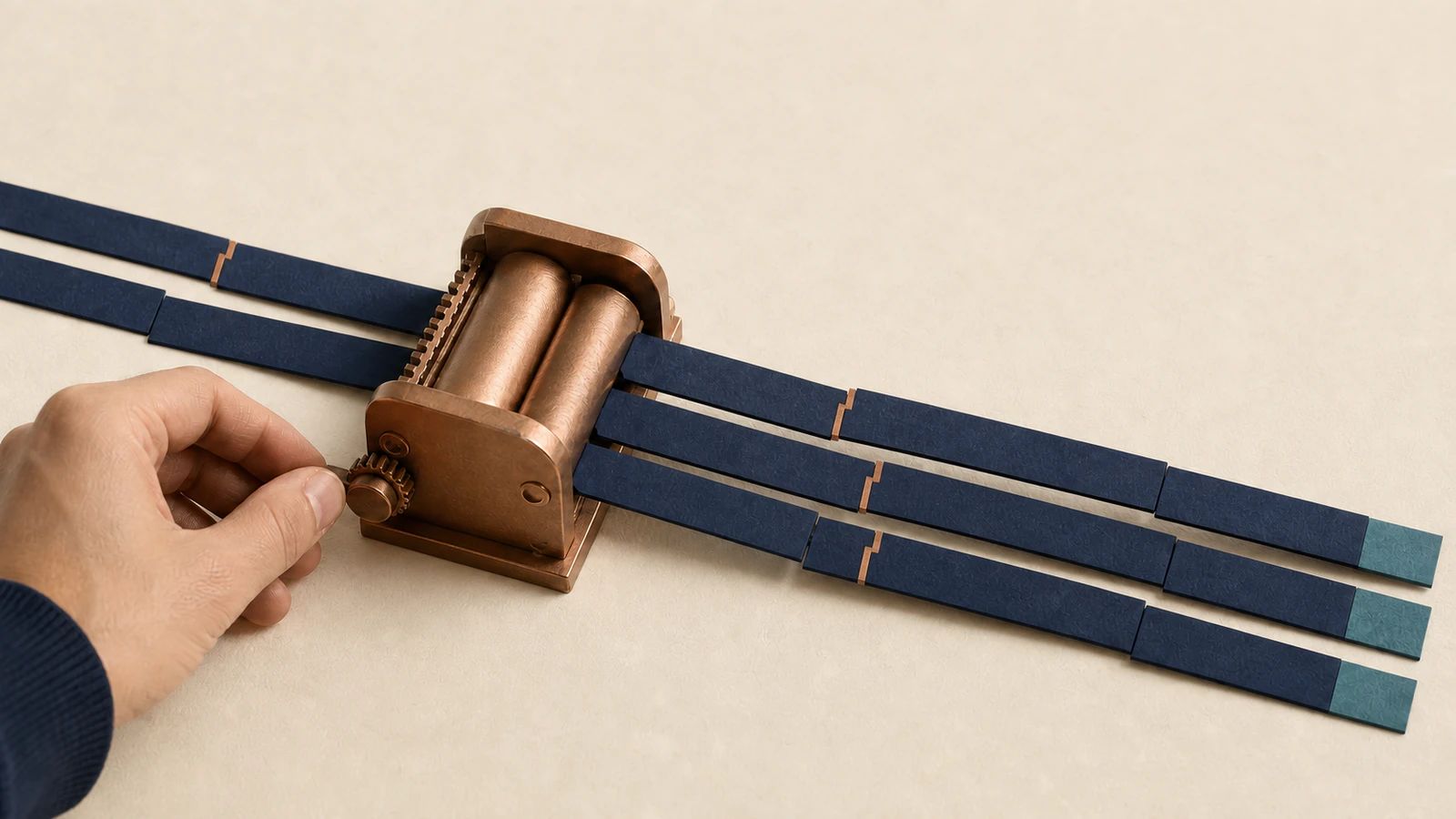
Picture a workshop press. A part is placed beneath it, the press comes down, and the next part follows. The action is quick, steady and powerful. If the guide is accurate and the part is correctly placed, each pass produces the same good result. If the part is crooked, the press does not pause to think. It repeats the defect, faster and at scale.
AI behaves in much the same way. It amplifies what it is given. The first question is not “Which AI should we buy?” but “What exactly are we putting under the press?”
Idea 1 — Start with one part, not the whole factory
A first use should be small enough for the team to understand from beginning to end. “Help customer service” is too broad. “Draft a first reply to change-of-address requests” is specific: the input is known, the expected reply is clear and unusual cases can be set aside.
That narrow choice protects the team and the customer. It lets you see the time genuinely saved, the mistakes produced and the points where the assistant becomes unsure. A frequent, repetitive and low-risk task is a far better beginning than a general assistant expected to answer every question for everyone.
Idea 2 — Check the guide before bringing down the press
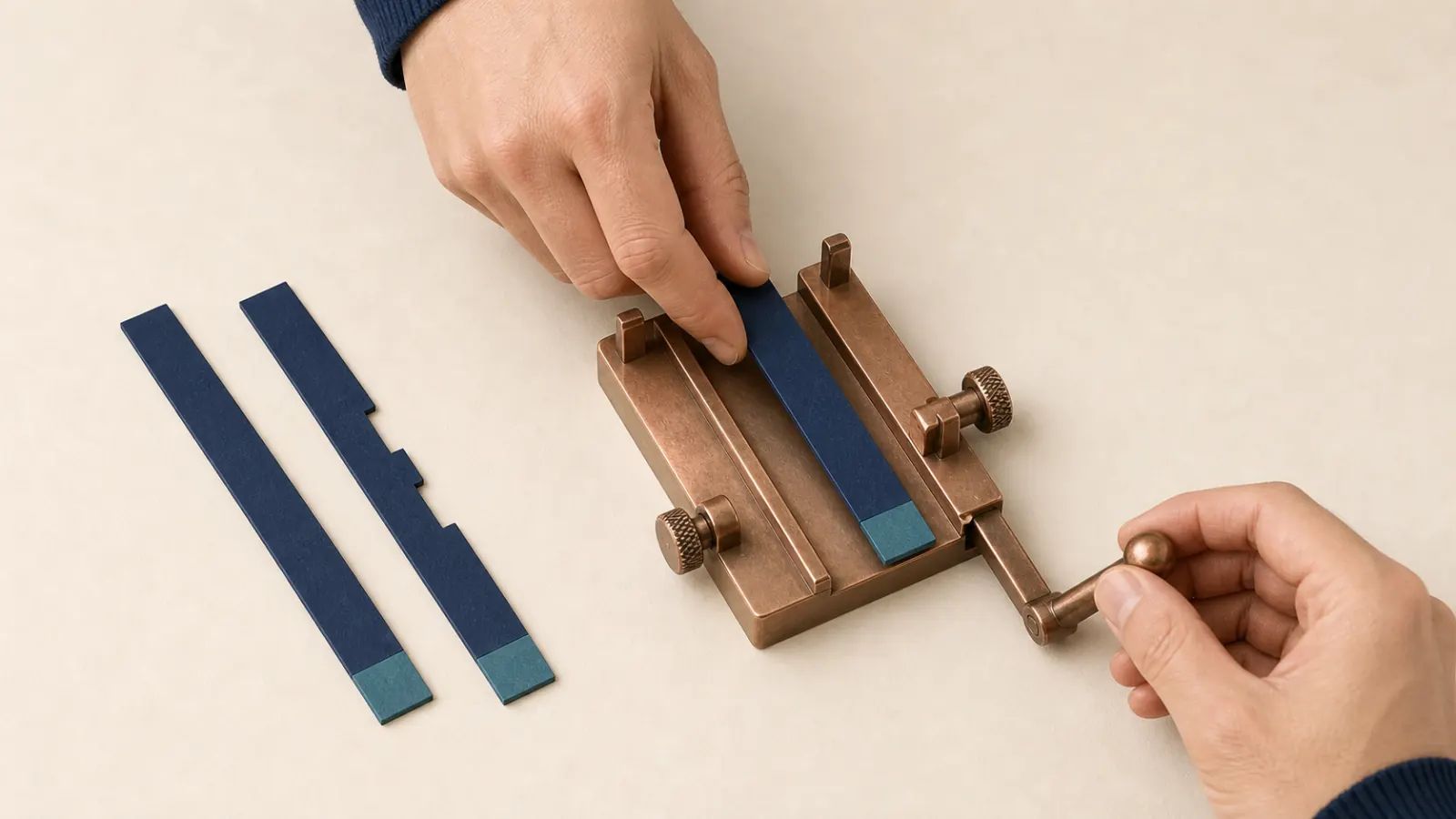
The guide gives a pressed part its shape. For an assistant, the equivalent is a short set of rules and trusted sources. Which price list is current? What promises may be made? What tone should be used? When must the assistant stop and ask for help?
Consider a sales team drafting replies to tenders. If three shared folders contain three different descriptions of the same service, the AI may select the wrong one and sound completely certain. The useful preparation is not a grand data project. It is one agreed source, a few examples of acceptable replies and a simple rule for exceptions.
Idea 3 — Keep a hand near the stop button
Even a well-set press is watched. In the same way, a named person must be able to review, correct and pause the AI use when quality falls. Their job is not to approve every sentence for ever. It is to spot recurring mistakes, improve the instructions and decide when the task is ready to expand.
The team should also agree what will never be sent without a human check: a financial commitment, a sensitive response, regulatory advice or a promise to a customer. A specific boundary gives people more confidence than a general reminder to “use care”.

Putting it into practice
Choose one task carried out at least twenty times a month. Bring together the person who does it, their service lead and someone who knows the source material for forty-five minutes. On one page, write down what the assistant receives, what a good reply looks like, which documents it may use, three situations that must go to a colleague and who will keep an eye on quality.
Then test ten real examples without sending anything to a customer. Count the replies that can be used as they are, those that need editing and those that must be rejected. You will quickly see whether AI saves time or whether the work itself still needs attention.
Takeaway
AI is not the starting point; it is the press. The value comes from the part you choose, the guide you set and the person watching the result. To choose a sensible first use, let’s talk.