In short
A good launch proves that a service works on the day it opens. It does not promise that the service will remain just as simple six months later. New customers arrive, teams change, unusual requests become common and temporary fixes stay in place.
The service may not fail all at once. It gradually falls out of line. Keeping it reliable means noticing small gaps, understanding which ones return and making time to bring the whole service back into line.
A simple picture
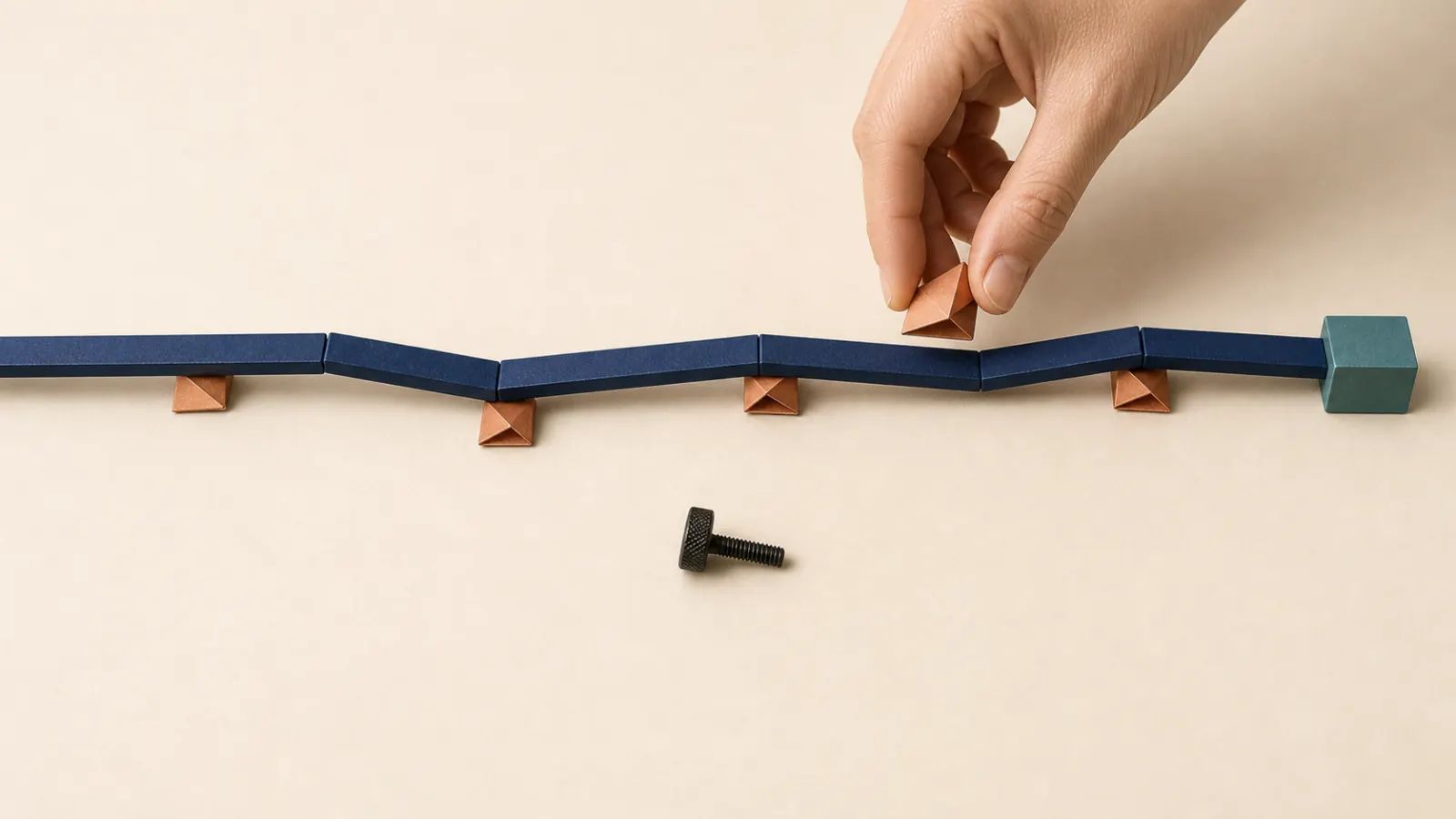
Picture a row of small parts, perfectly aligned as they leave a workshop. The table moves, a few parts slide and others turn slightly. Each movement looks minor on its own. After several knocks, however, the row is no longer regular.
The workshop uses a checking gauge: every part passes through a simple shape that shows at once whether it is still right. The gauge does not turn back time. It reveals a fault before that fault reaches the customer.

Idea 1 — Launch brings alignment; daily life brings movement
During a launch, the goal is shared, key people are available and decisions are made quickly. Once the service is live, that attention moves to other priorities. At the same time, real use starts to change what was originally planned.
A portal designed for two kinds of request soon receives five. An approval added for one important customer becomes standard practice. A temporary spreadsheet ends up connecting two teams every day. None of these changes is foolish on its own. Their combined effect is what moves the parts.
Accepting that movement as normal avoids a search for blame. The useful question is: what has changed since launch, and which working rules have failed to keep up?
Idea 2 — Repeated small fixes show where to look
When one part slips out of line, someone can push it back by hand. If the same part moves every day, the table deserves attention. In a digital service, manual corrections, reopened requests and recurring incidents provide the same clue.
Consider a team correcting addresses that pass incorrectly between two applications each week. Each fix takes three minutes, so it never feels important. Together, however, the fixes delay orders, involve two departments and sometimes cause a second delivery. Grouping the cases across one month shows that the small defect is worth correcting at its source.
Watch what returns, not only what is making the most noise today.
Idea 3 — Check the service against the gauge regularly
Waiting for a serious incident before realigning the service is expensive. A short monthly check is often enough: which gaps keep returning, which connections have been added, which temporary fixes remain and which cause should be addressed first?
This conversation does not need a long presentation. It needs people who see the real work and a small amount of protected time for repair. Without that space, visible new features will always beat quiet maintenance. The gauge becomes a useful habit: it brings a few parts back into line before the whole row scatters.

Putting it into practice
Choose a service that has been live for more than six months. For two weeks, ask teams to note every manual correction, reopened request and exception they handle. Do not try to solve everything yet. Simply group the cases that look alike.
At the end, take the largest group. Follow one case from beginning to end, name the most likely cause and book one small fix that can be tested within the month. Then check whether the case appears less often. This is a first, practical pass through the gauge, without launching a major programme.
Takeaway
Movement after launch is normal; drift is not inevitable. Watch the gaps that return and realign the service before customers feel them. To choose the first point worth correcting, let’s talk.