In short
After a transformation, teams often create several routines: a weekly check-in, a monthly review and a rapid meeting whenever a serious incident occurs. On paper, every need is covered. In practice, the same topics travel from one meeting to another, decisions disappear and nobody is quite sure where to look for the agreed next step.
Give each meeting one clear job, connect them through one decision log and let issues move between them without retelling the whole story.
A simple picture
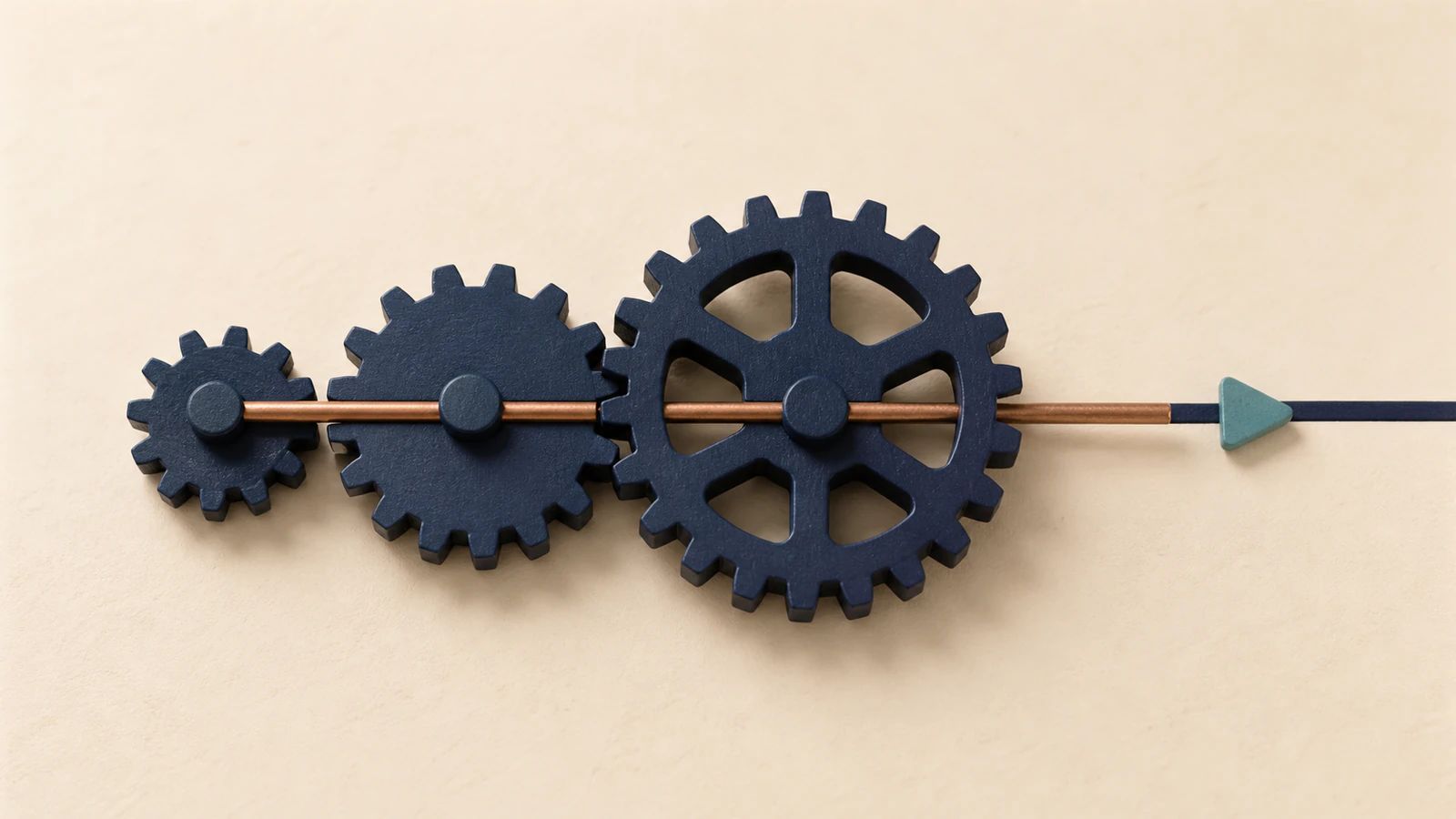
Picture three gears of different sizes, each on its own axle, linked by a transmission. They turn at different speeds but contribute to the same movement. Their connection keeps the mechanism coordinated.
The weekly check-in is the small gear: it clears immediate obstacles. The monthly review steps back and makes choices about priorities. Incident response moves quickly when a service is at risk. Their shared connection is the log that records each decision, the person taking it forward and the date when progress should be checked.
Idea 1 — Give each meeting a different job
A useful meeting does not begin with “let’s go round the room”. It begins with a specific question. Each week: what is stopping the work now, and who can remove the obstacle? Each month: which priorities should continue, stop or move? During an incident: how do we maintain the service, limit the impact and return to stable delivery?
Keeping those jobs separate prevents a minor detail from consuming the monthly review, or a long-term choice from being made in the heat of an incident. It also tells people what to prepare: a choice, a few relevant facts and a recommendation, rather than a lengthy update.
The weekly check-in may spot that customer onboarding is slowing down. The monthly review should not discuss every customer file again. It should decide whether to reduce demand, simplify a step or add short-term help.
Idea 2 — Connect all three gears through one mechanism
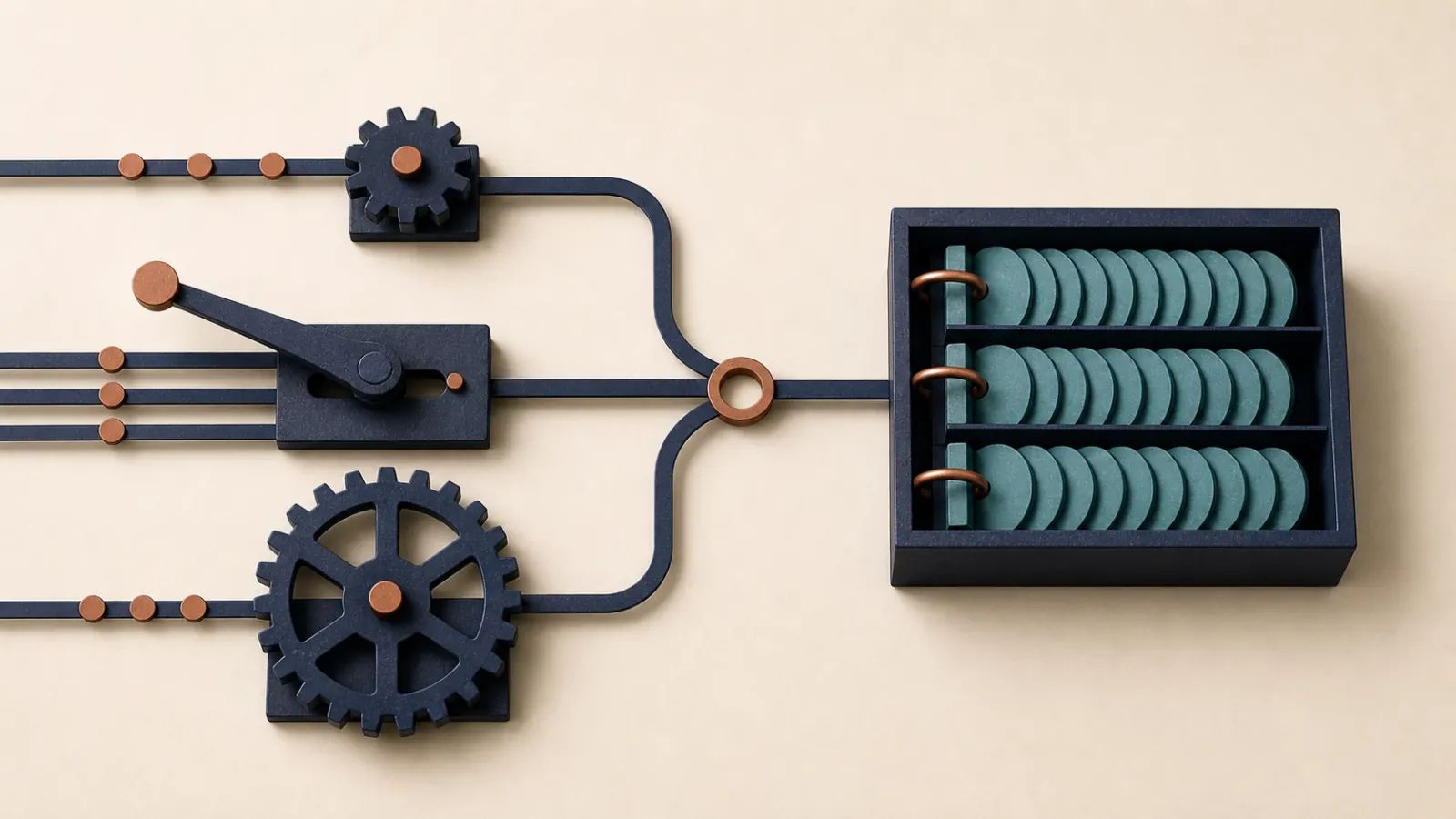
When every meeting has its own tracker, a decision can vanish as soon as it moves to another level. One shared log is often enough to restore the connection. For each decision, it records a clear statement, the reason, the person arranging the next step, the due date and the current position.
This log is not a full set of minutes. It does not repeat the entire discussion. It keeps what people will need two weeks later: what was agreed, what should happen next and when the matter needs to be raised with someone else.
In the onboarding example, the monthly review decides to remove one approval for six weeks. The weekly check-in then checks whether the delay is falling and whether a new risk has appeared. If service quality drops, the incident response begins with the original decision already in view. The connection keeps decisions from getting lost between meetings.
Idea 3 — Close the loop before adding more topics
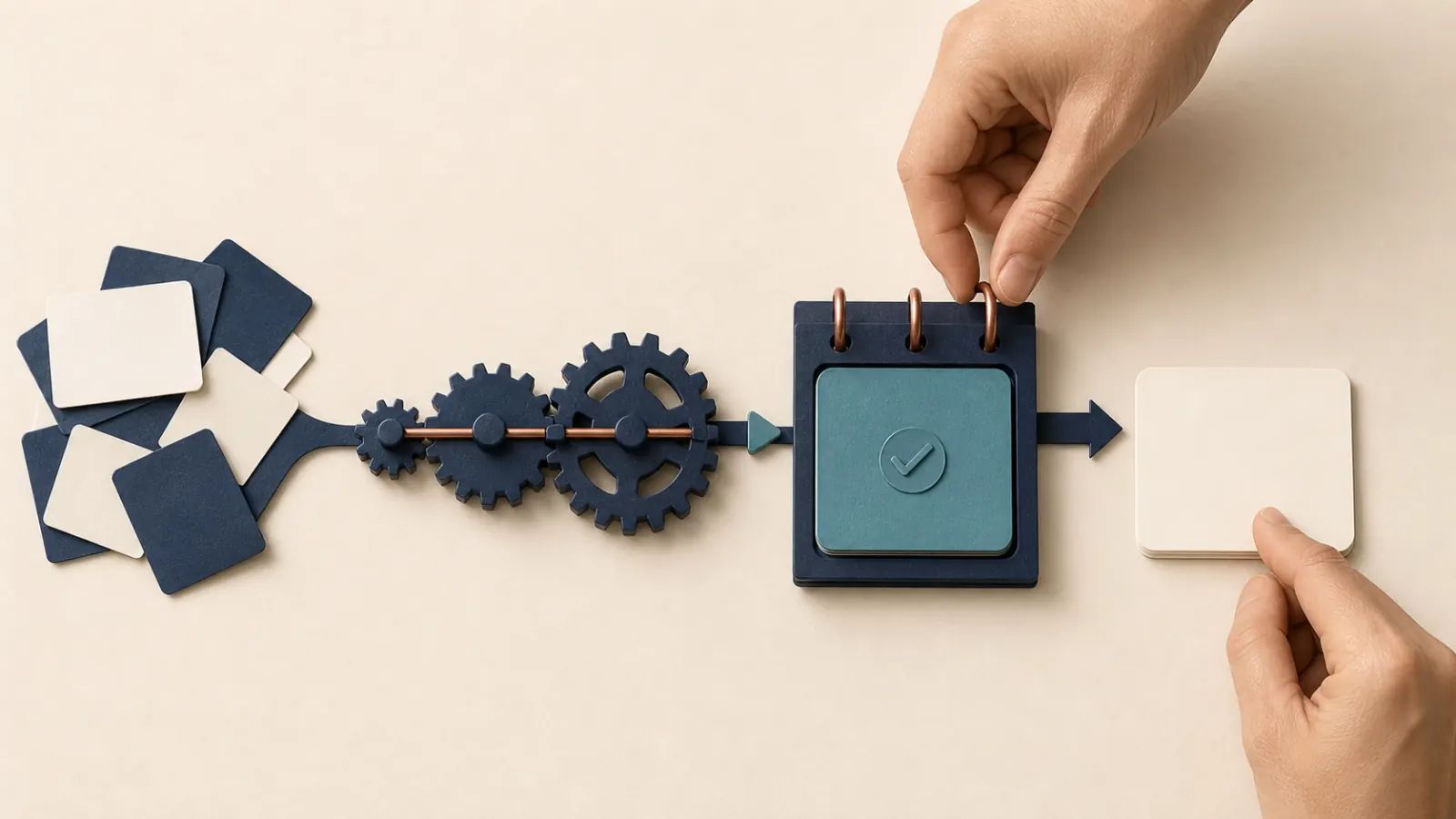
A sound rhythm is not measured by meetings held. It is measured by decisions that produce an effect people can check. Each session should therefore begin with the small number of commitments that have reached their due date. Were they completed? Did they improve the situation? Does the original choice need adjusting?
That habit changes the conversation. People no longer attend merely to report activity. They learn what works, correct what does not and avoid reopening the same debate under a new heading.
Closing a loop may also mean stopping an action that is no longer useful. That is not failure. It shows that management is responding to what is happening rather than protecting an outdated plan.
Put it into practice for leaders and service managers
Take the next three sessions already in the diary. For each one, write a single main question, two types of topic it may accept and the result it should produce. Then create one log with five columns: decision, reason, person taking it forward, date and current position. For one month, start each meeting with due decisions and redirect new topics to the right gear.
Takeaway
A lasting rhythm does not add another layer of meetings. It gives each gear a purpose, connects them through one mechanism and checks that every turn moves the service forward. If you would like help putting this mechanism in place without filling more diaries, get in touch.